





croqui, for architecture practices
A client brief goes in. Concept directions, floor plans, renders and a deck come out.
Croqui does the assembly of early concept work so the architect can do the architecture. Every number is checked, every drawing is a draft for review, and the firm decides.
How it works
Six steps, in the order a practice works. These are screens from the studio on the demo practice.
1 of 6
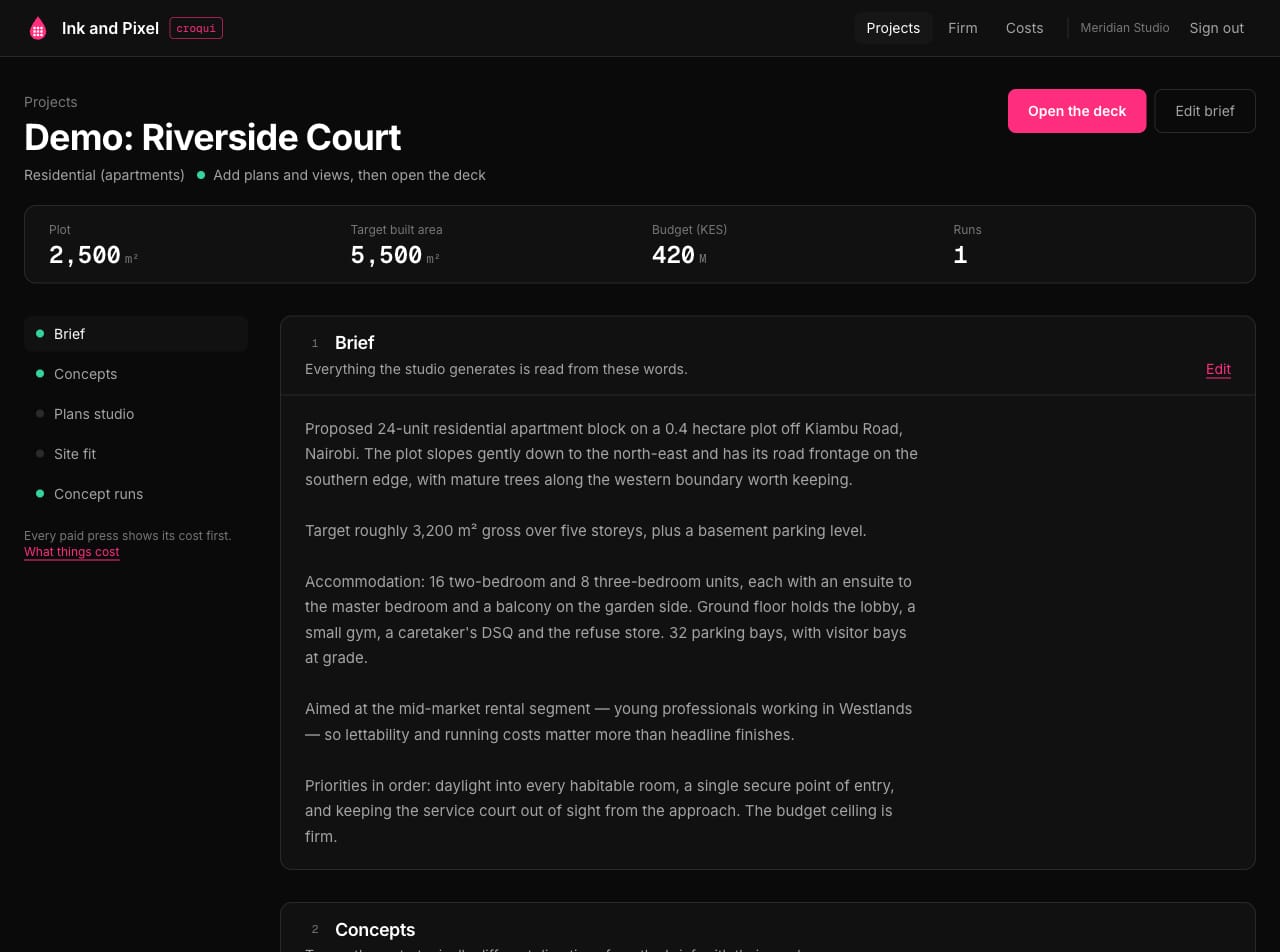
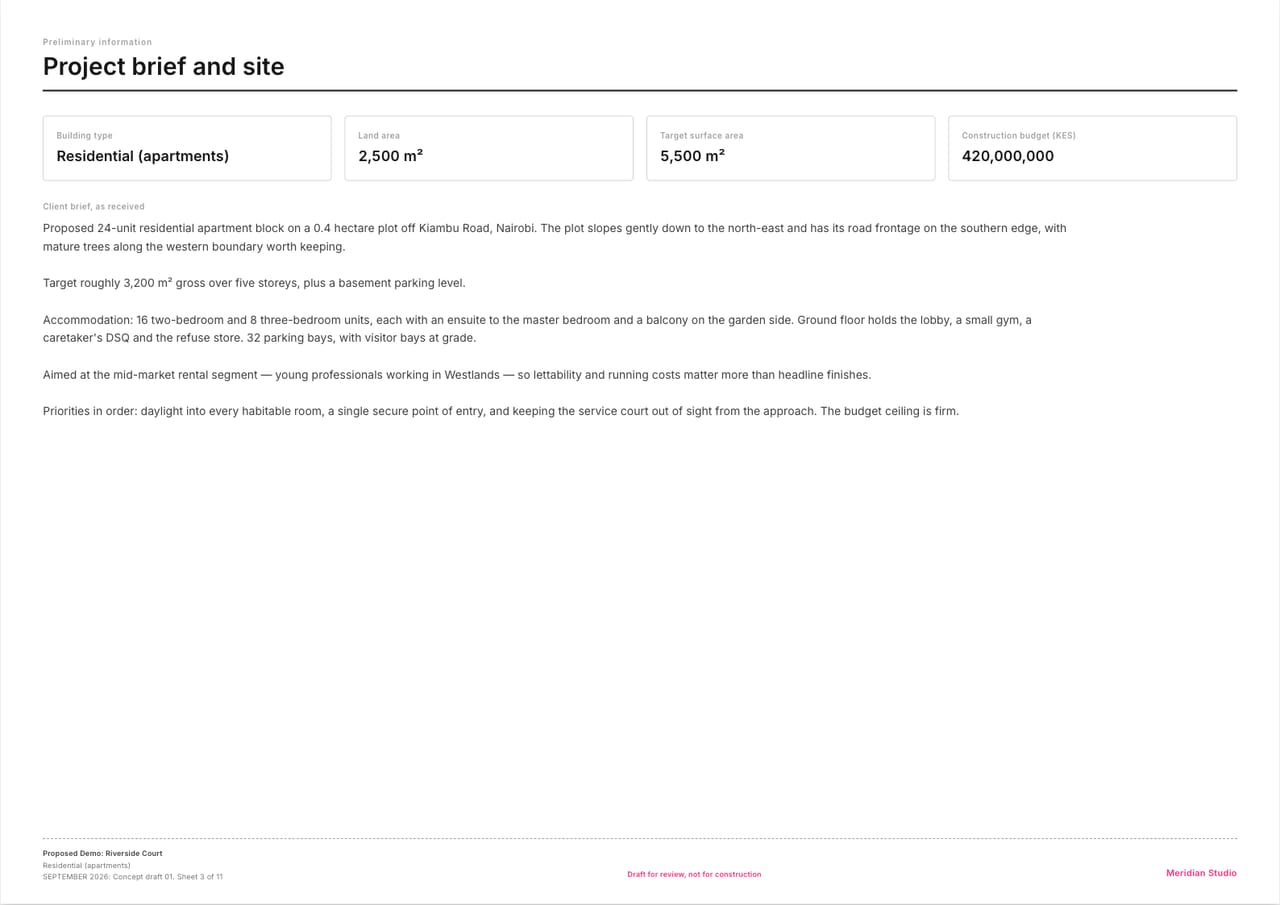
Write the brief the way the client told it
Four short steps: the site, the size and budget, what goes in it, who it is for. Everything the studio produces is read from these words, so the wizard asks for the things a model cannot guess.

2 of 6
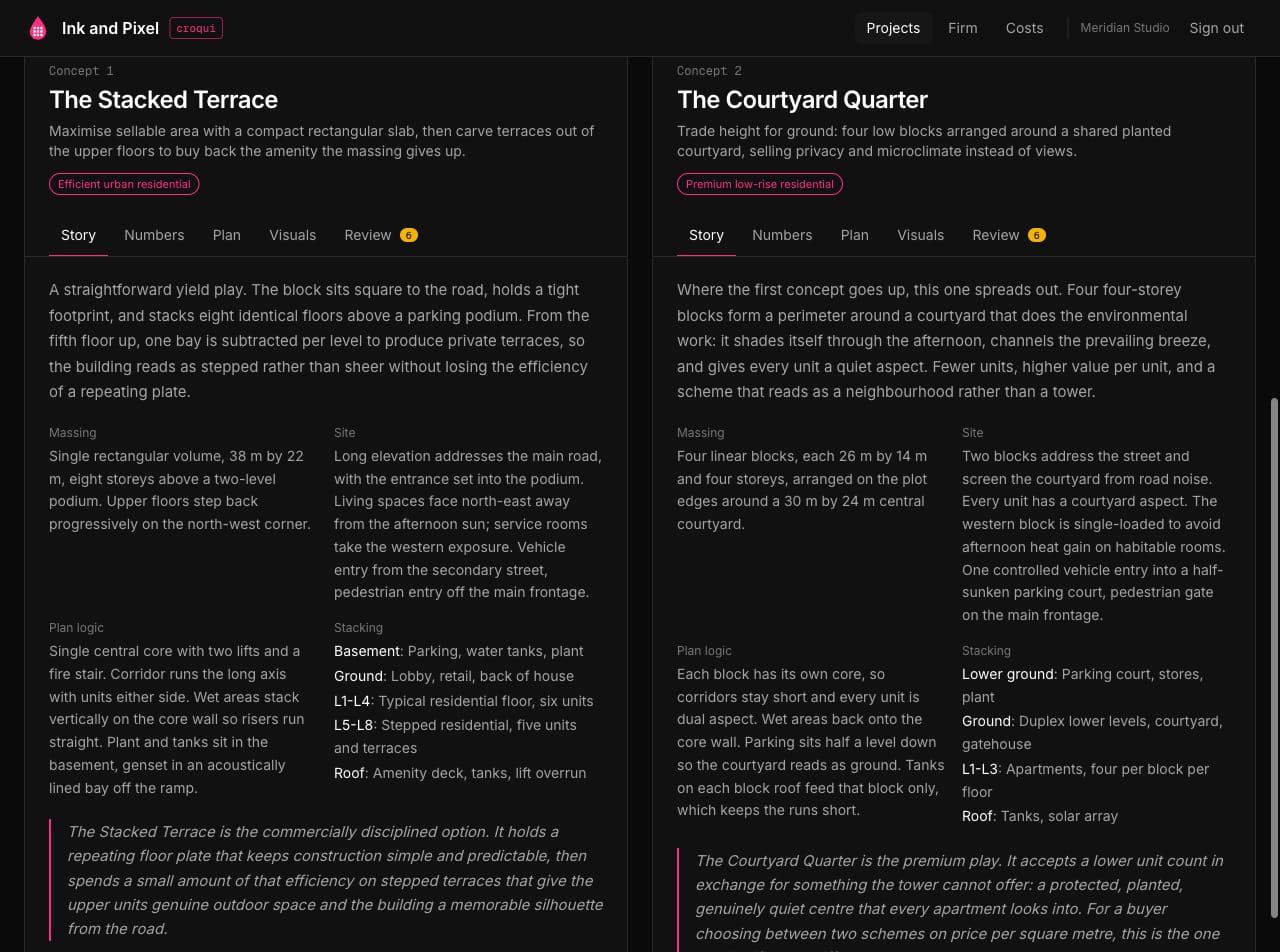
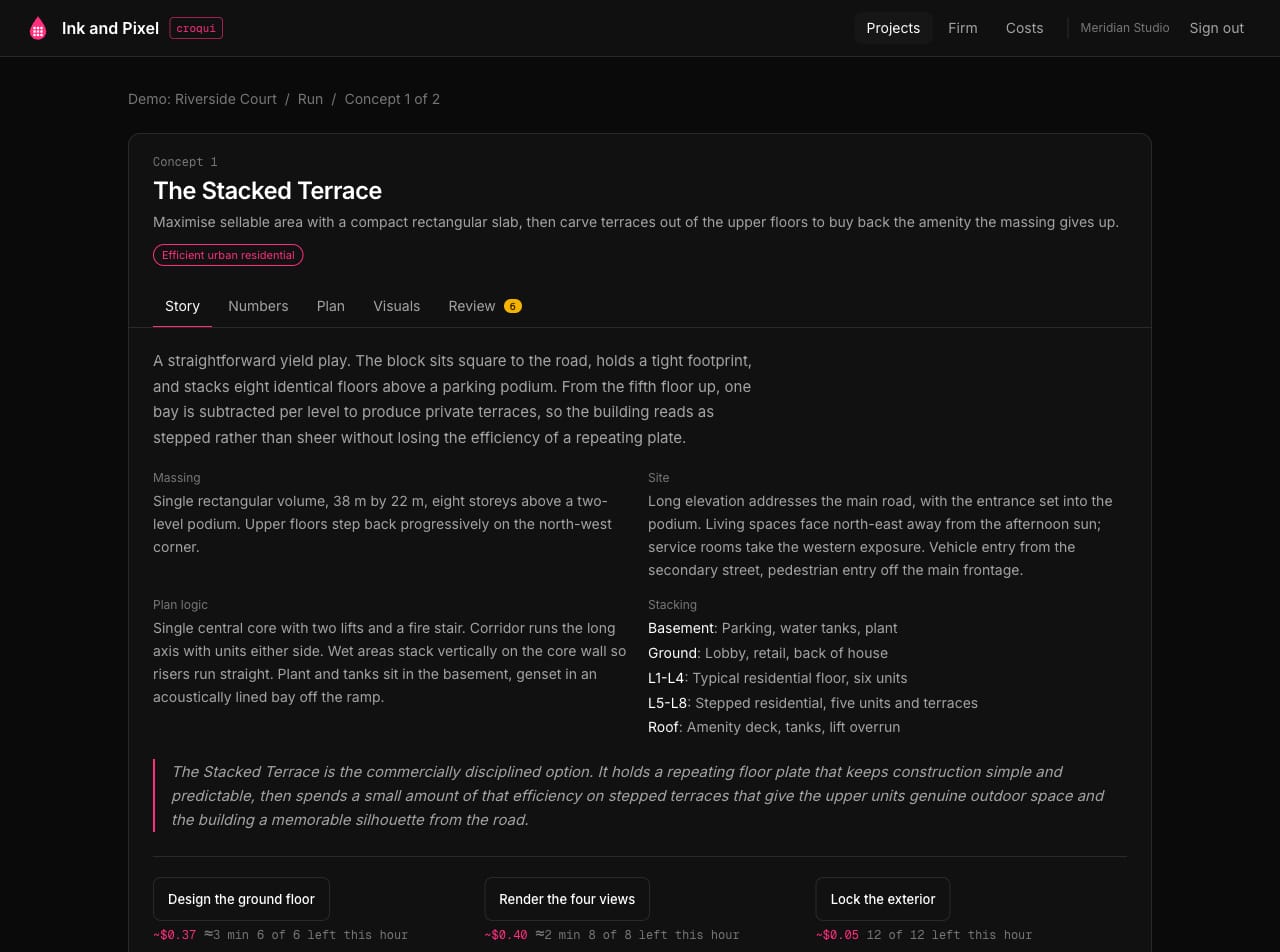
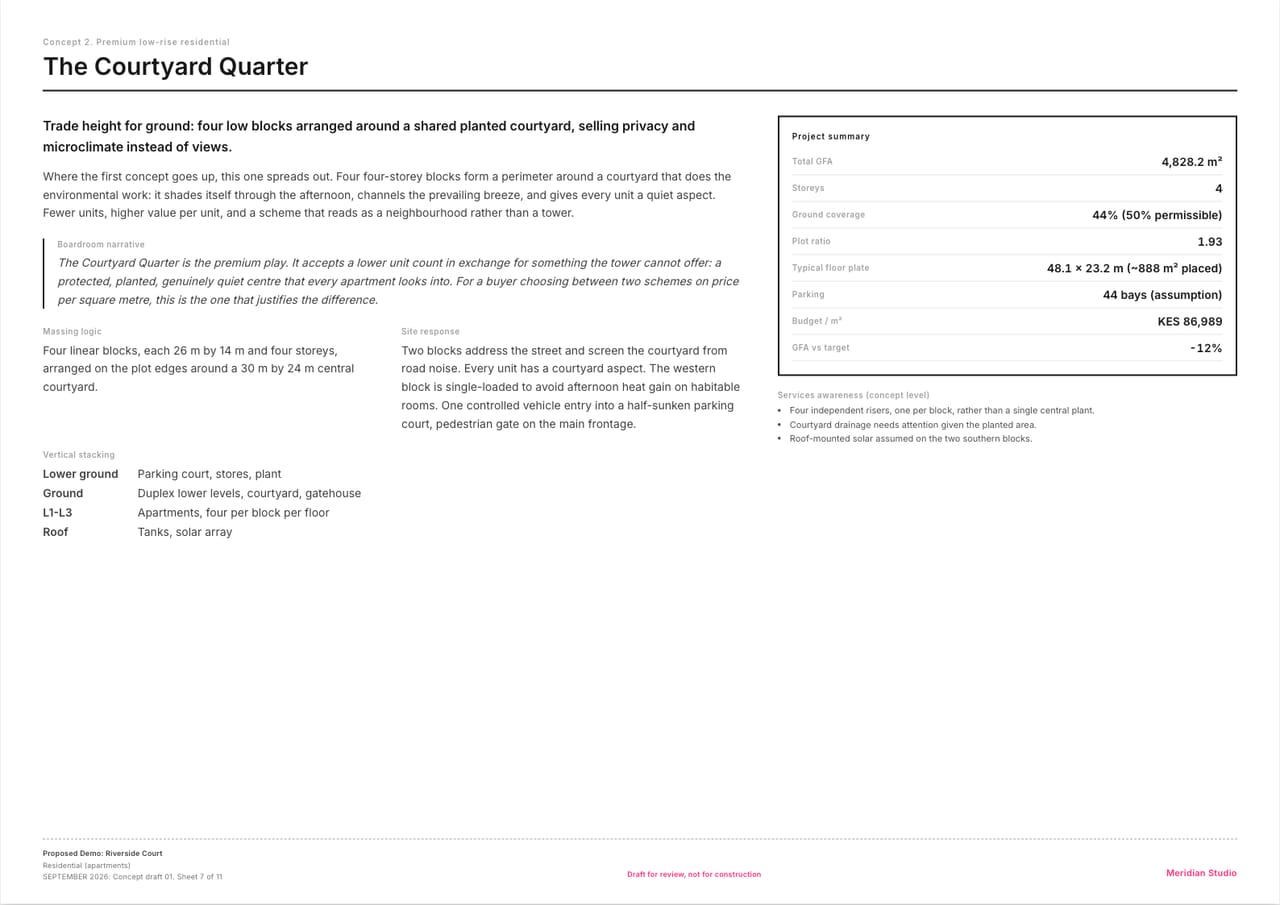
Two or three directions, strategically different
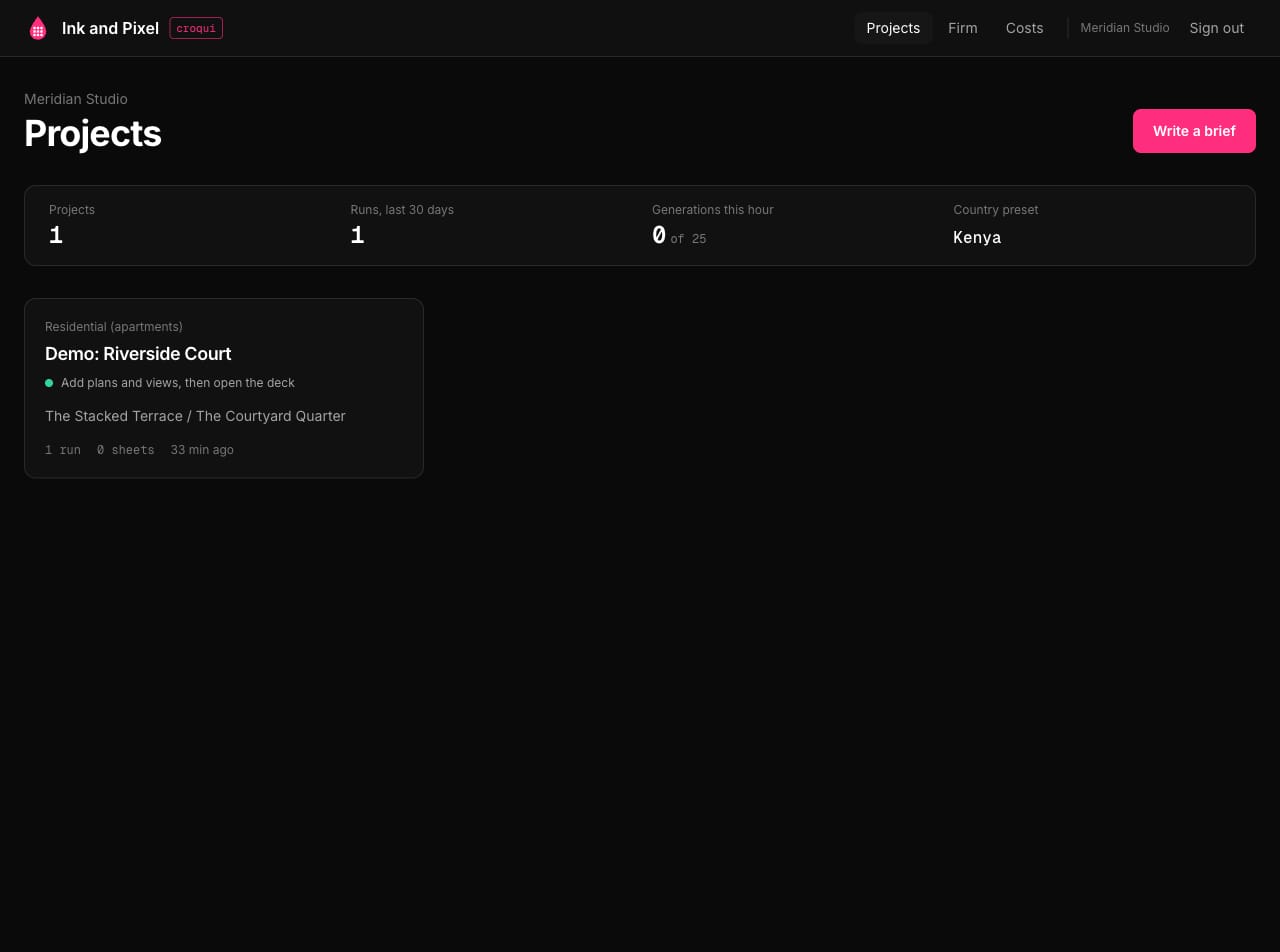
Each direction comes with its play, its massing, its site response, a room program, the numbers and the risks. Every press says how many generations are left this hour.
3 of 6
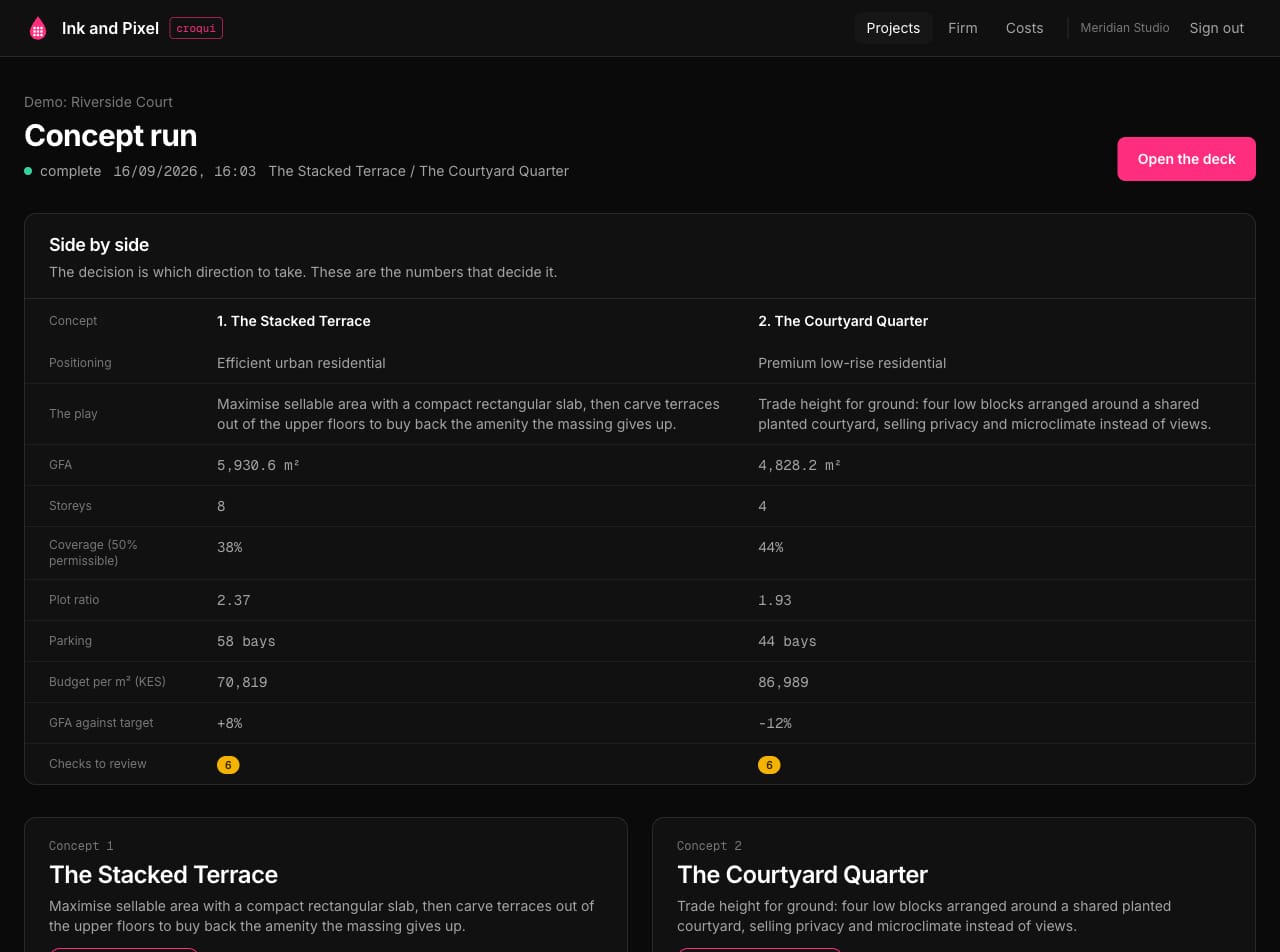
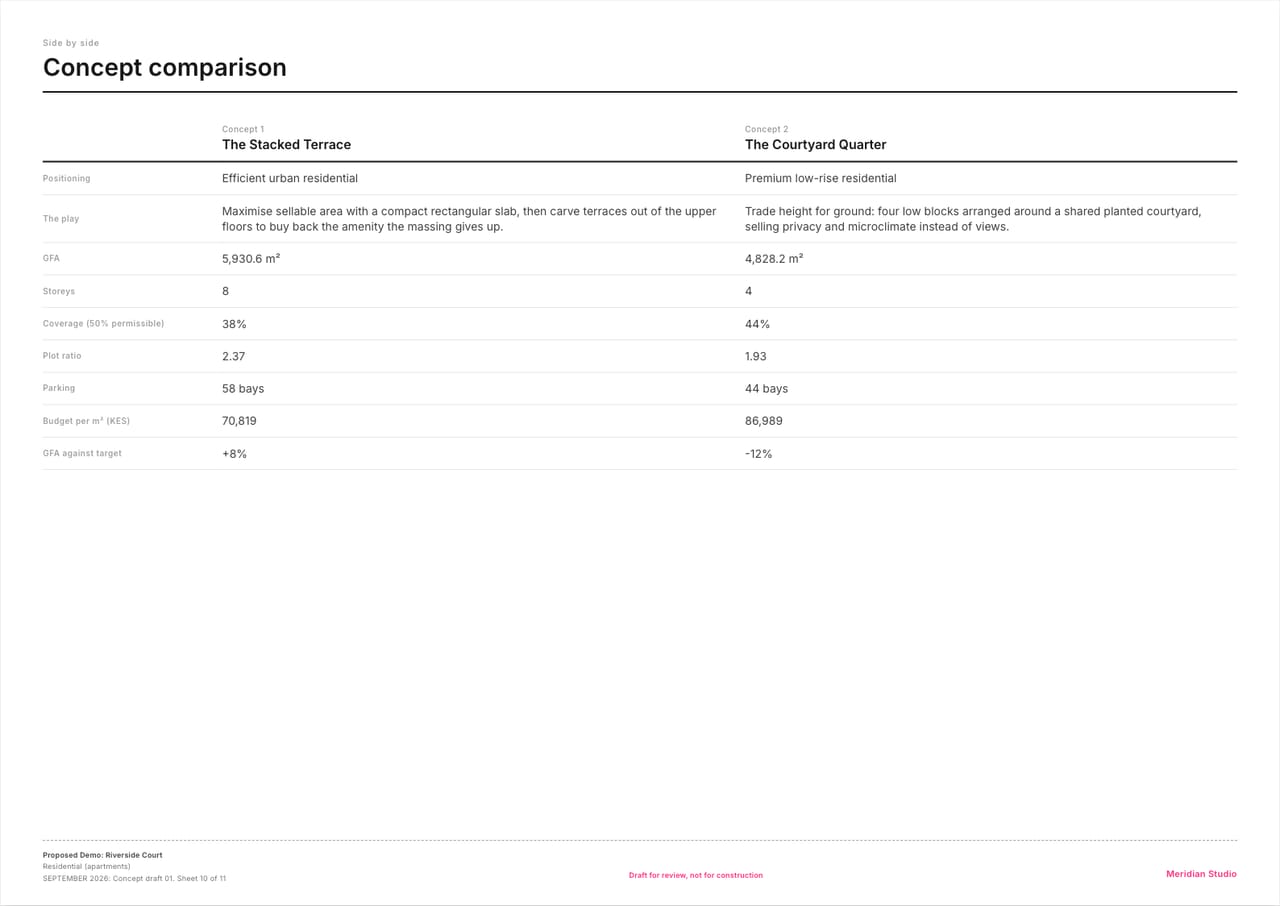
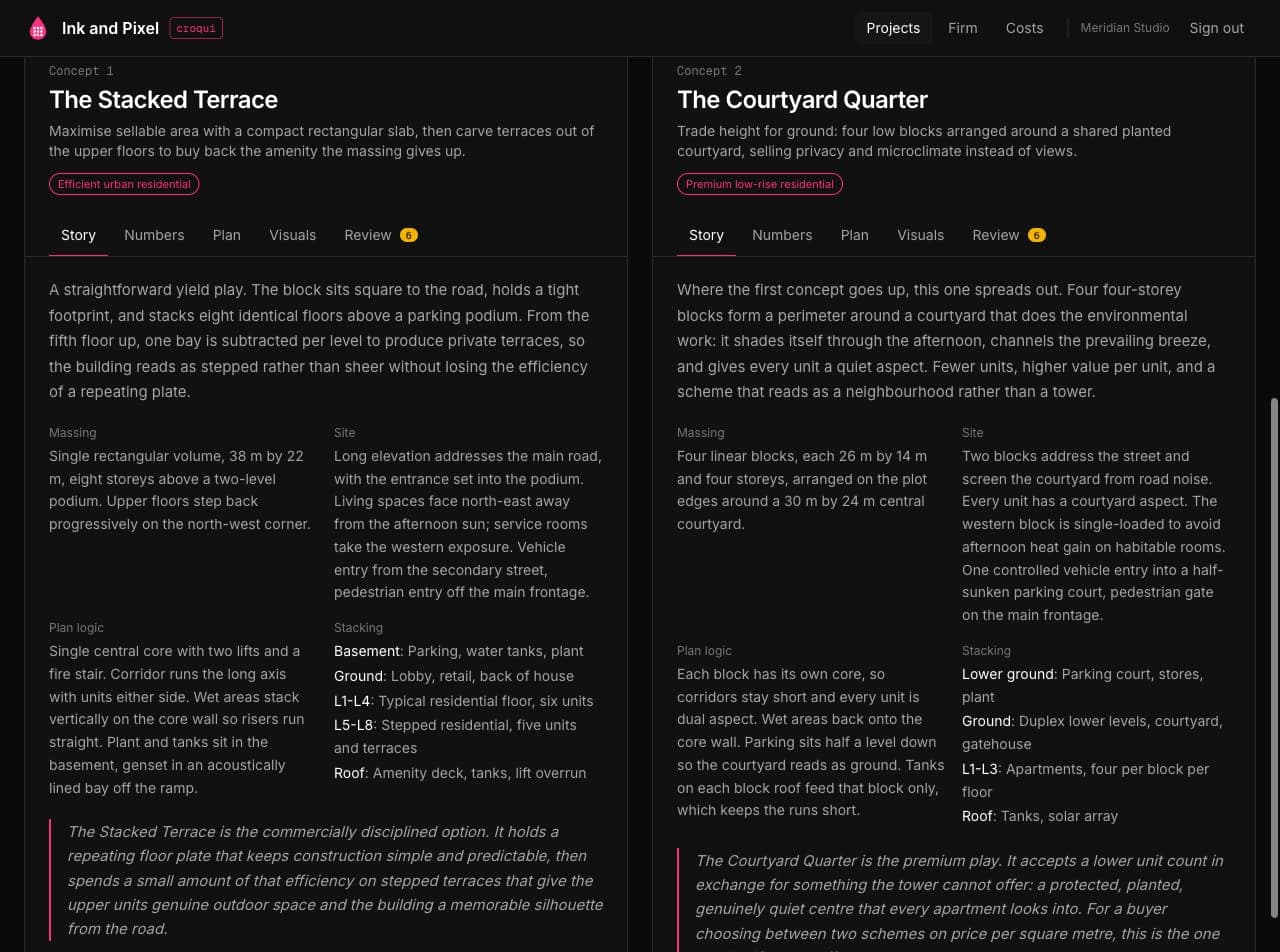
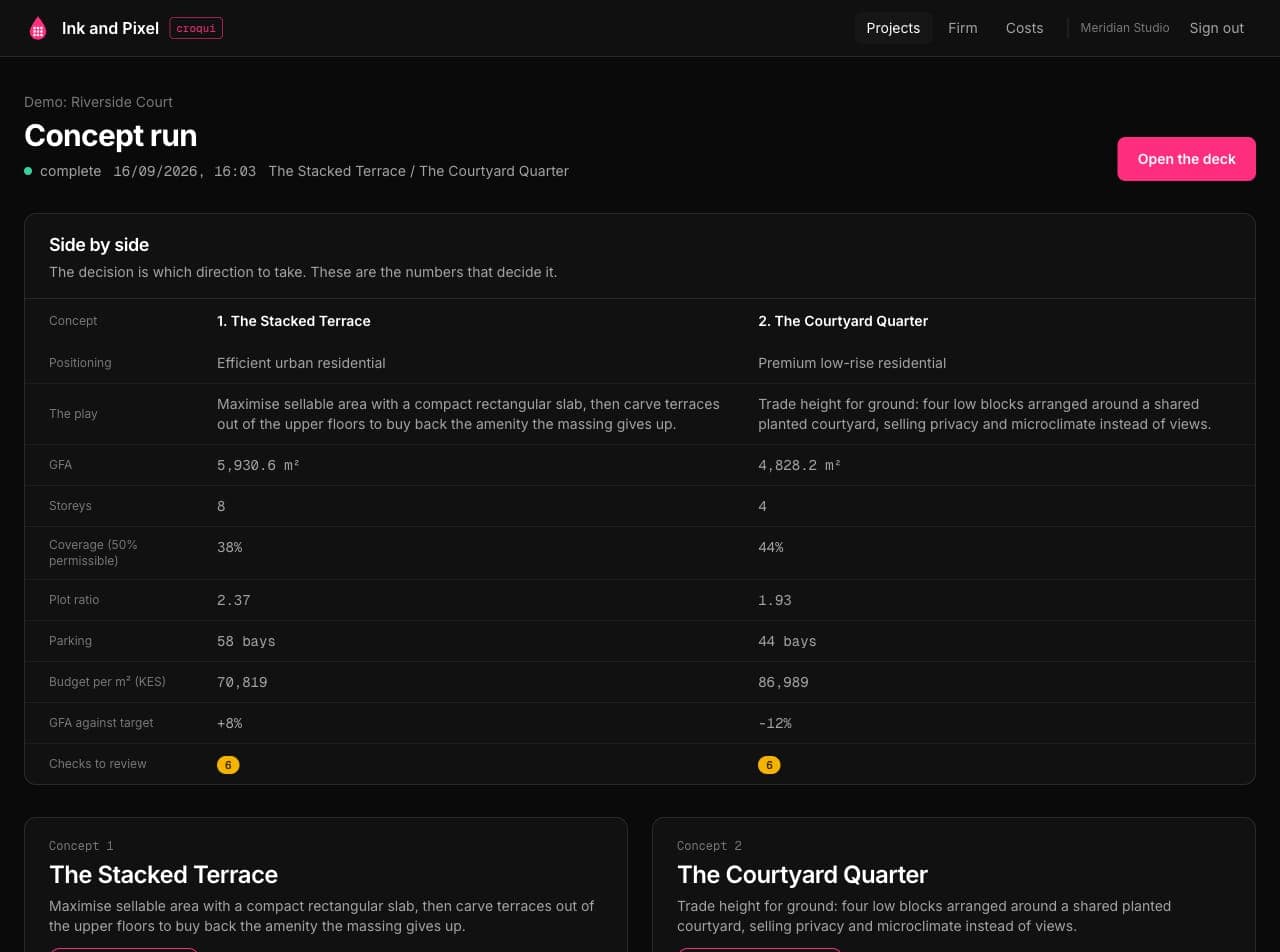
Every number checked against the brief
Coverage, plot ratio, floor area and budget per square metre are recomputed from the concept's own figures and compared across directions. A number that does not reconcile is flagged, never hidden.
4 of 6
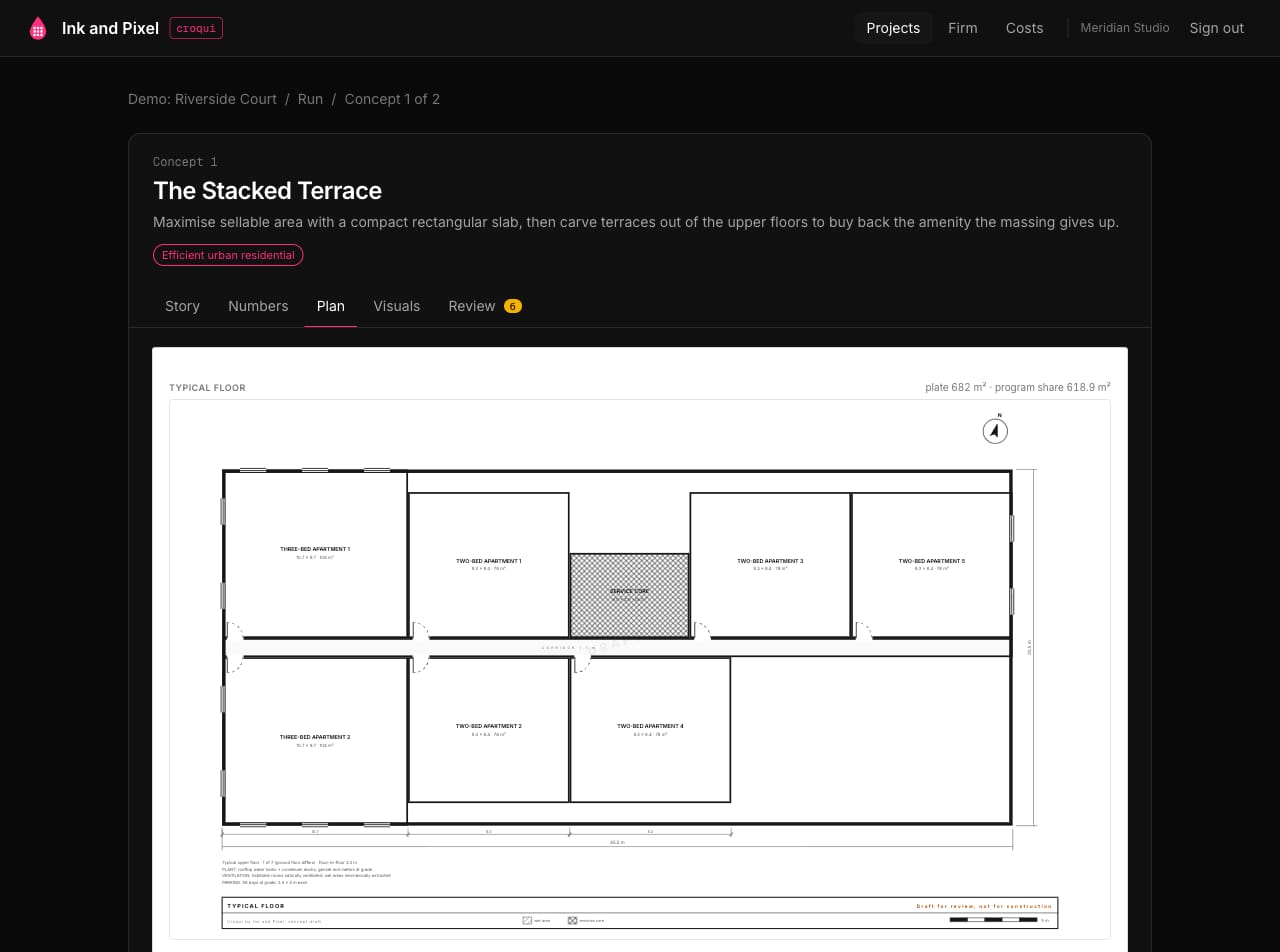
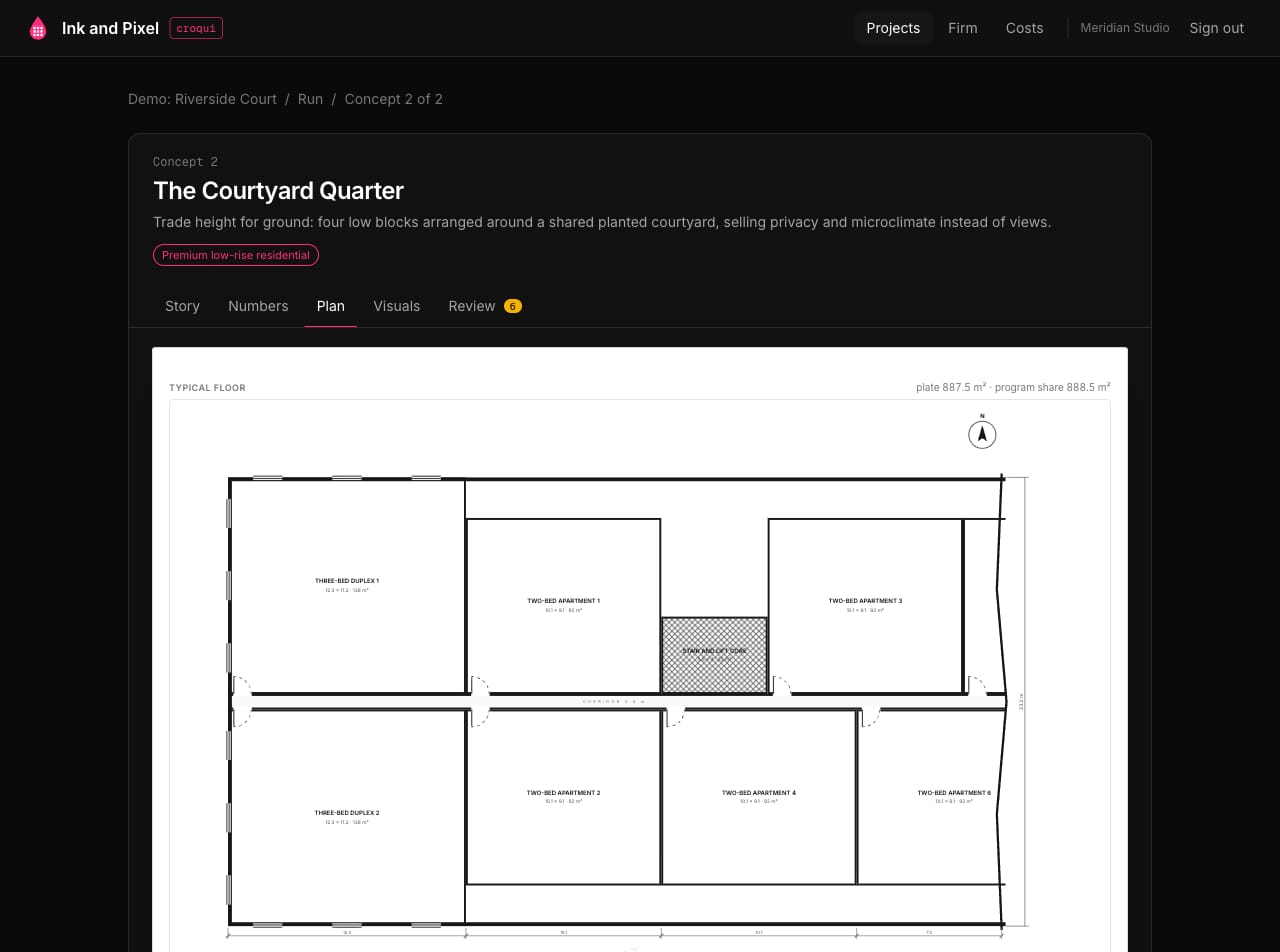
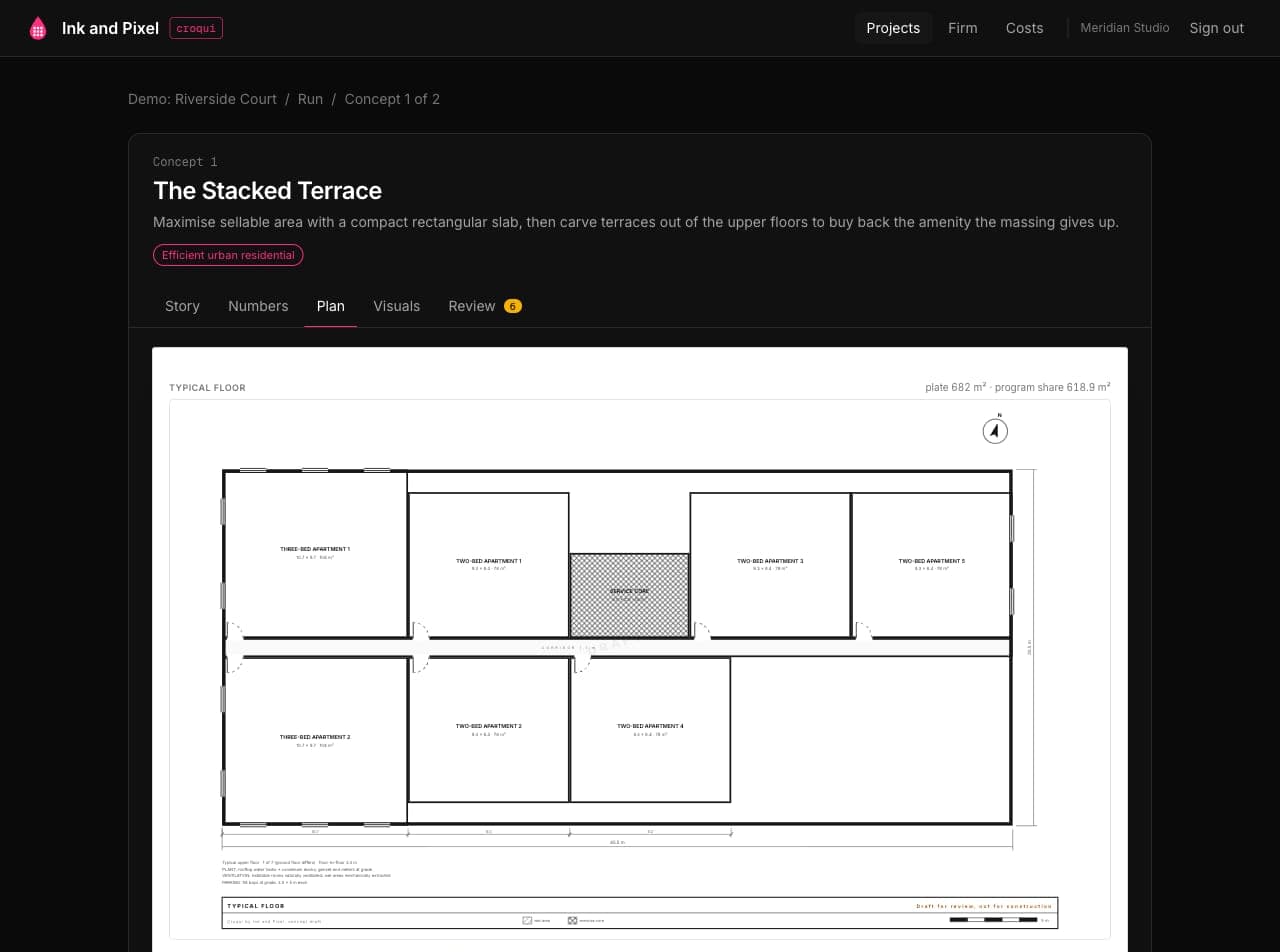
A floor plan at true room sizes
Rooms are drawn from the program with real dimensions, a north point, a scale bar and the firm's own drawing notes, then checked against the design standards before it is shown.
5 of 6
Checks to review, on the sheet
A corridor under the minimum width, a room below the standard, a total off the target: each one is a line in the review tab and on the printed sheet, so the architect decides.

6 of 6
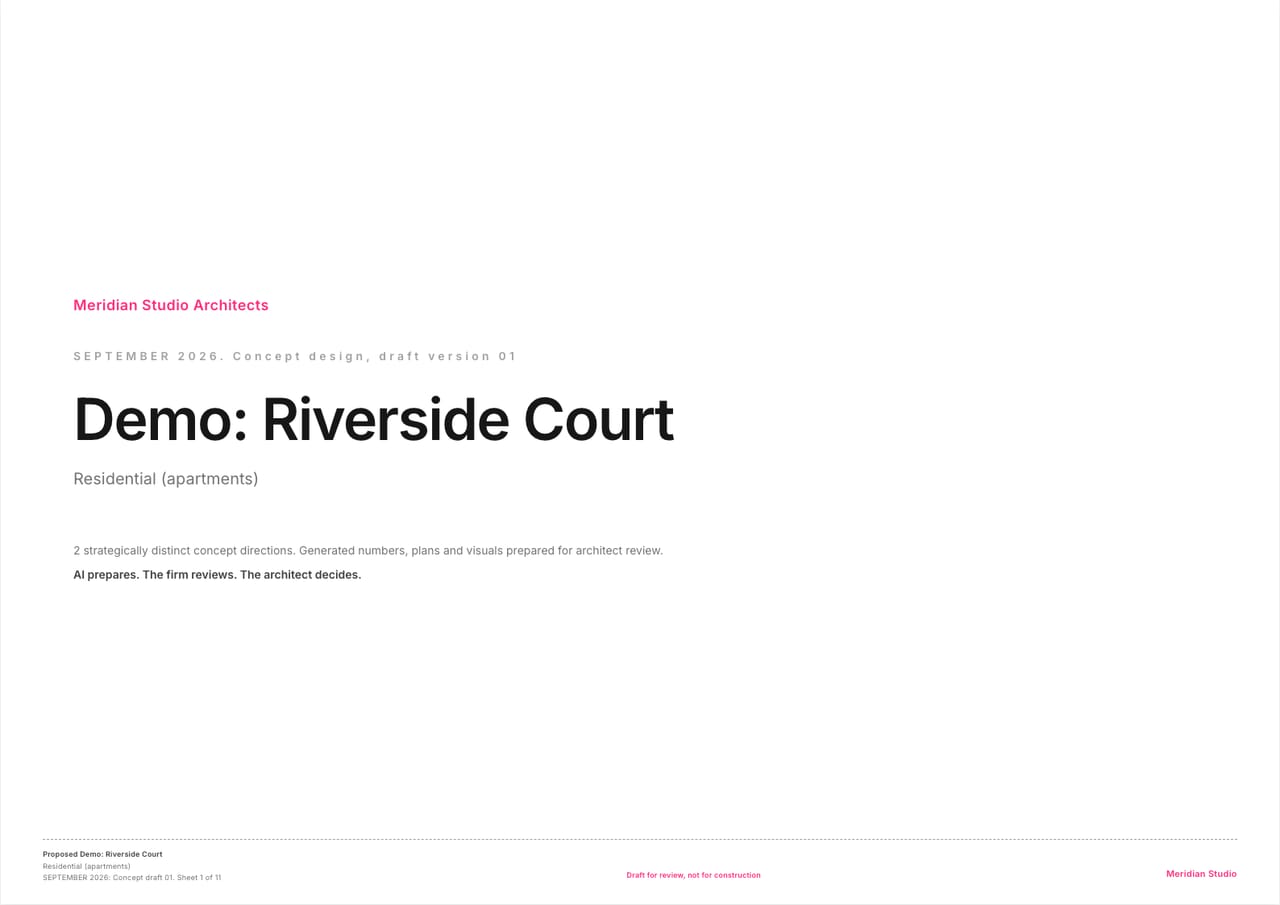
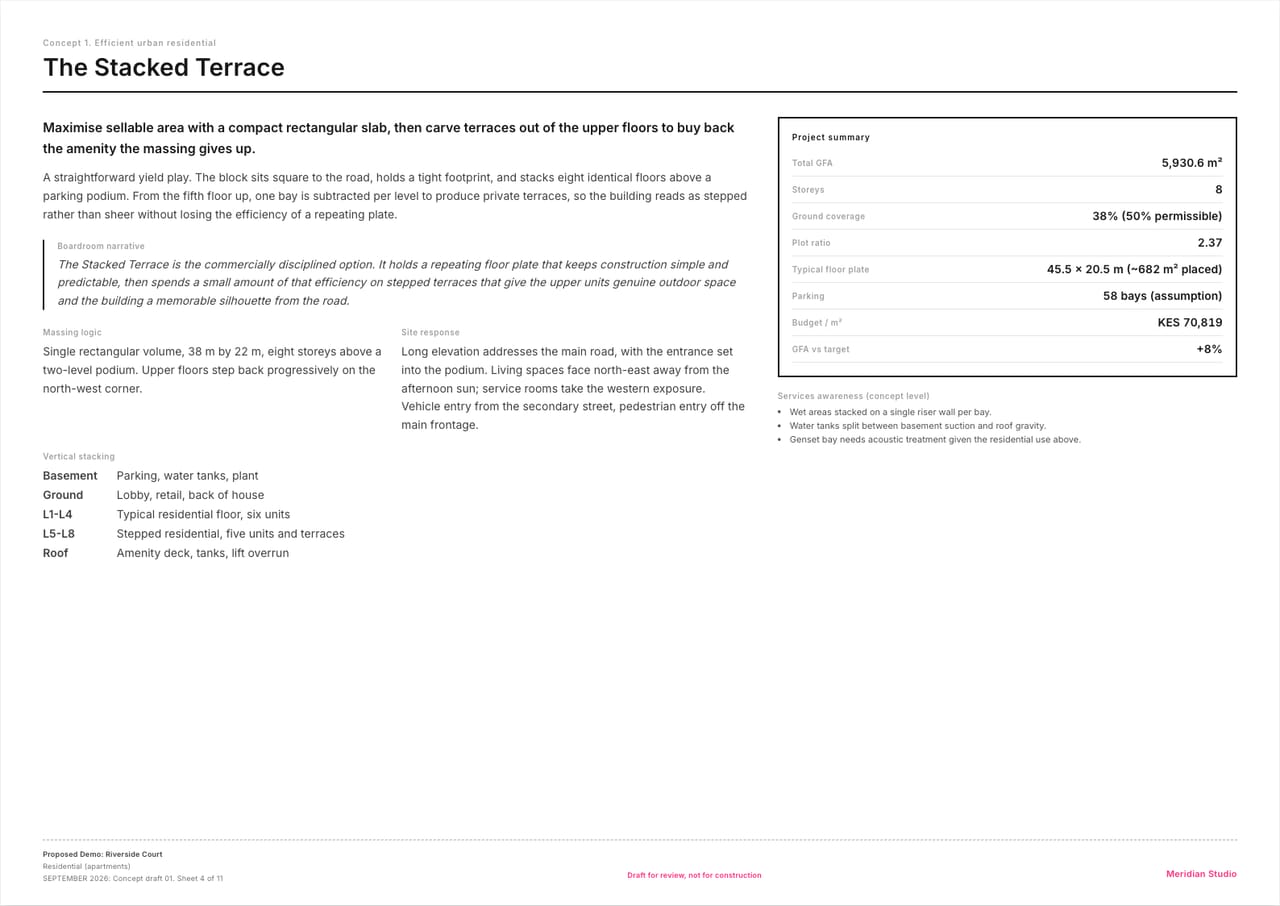
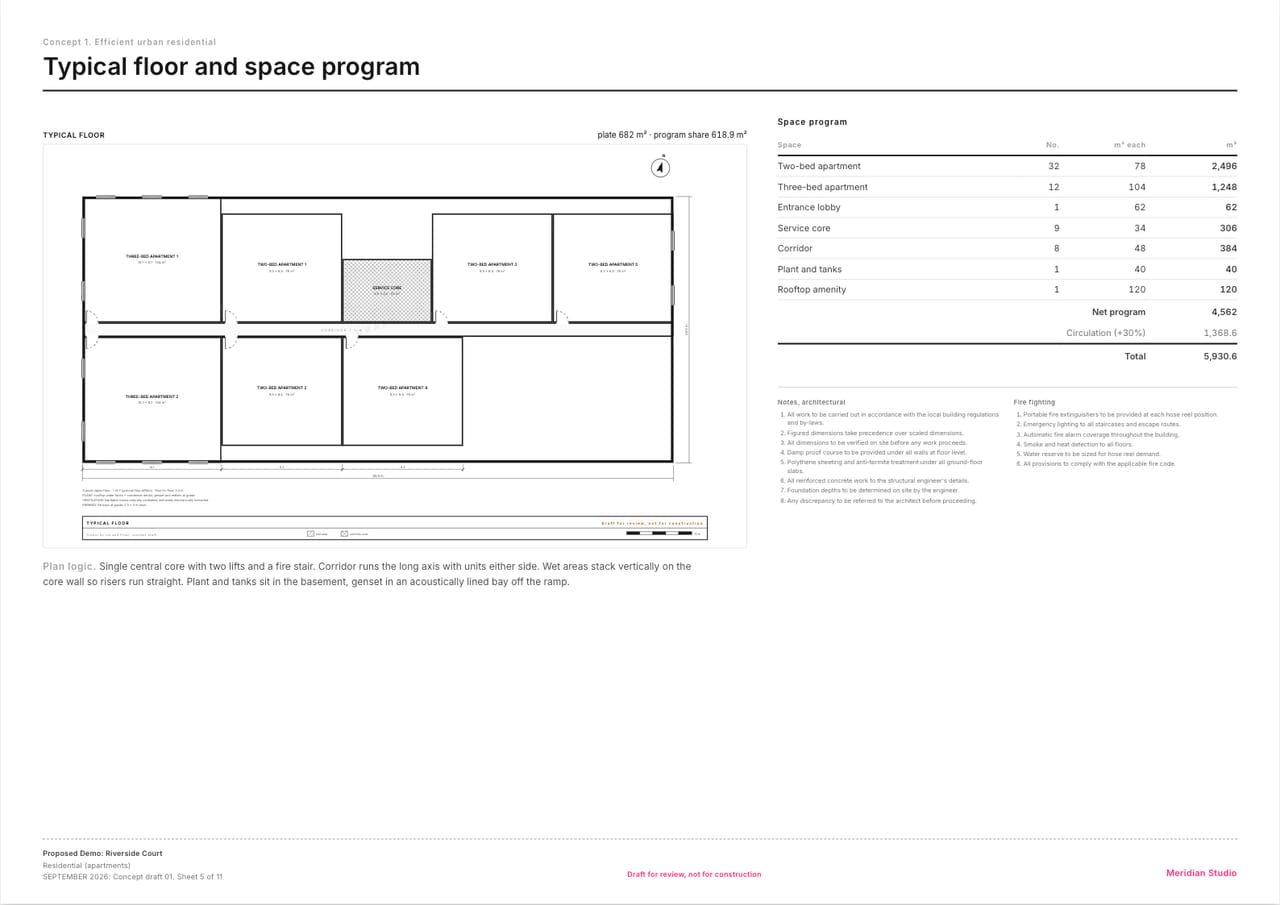
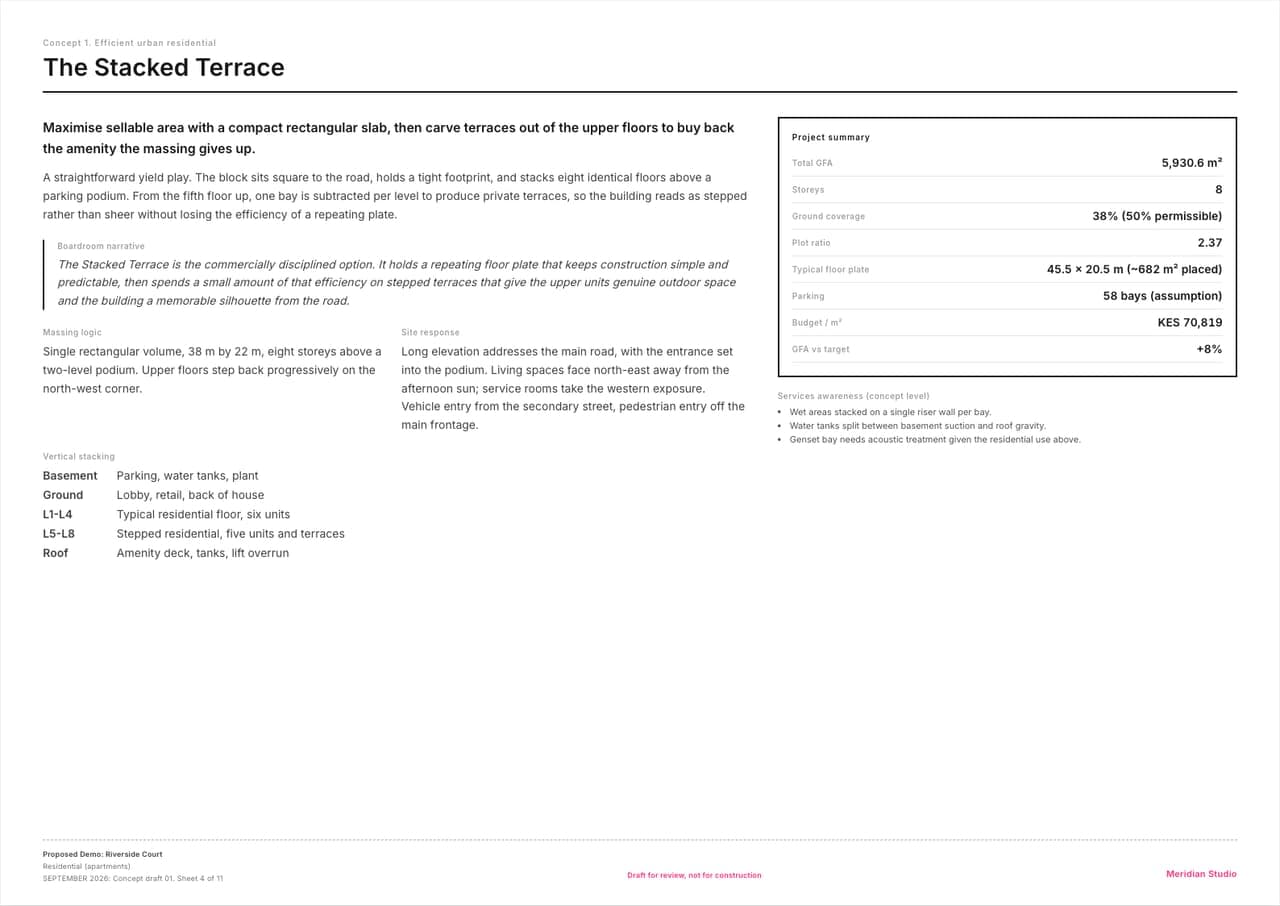
A printable A3 deck on your letterhead
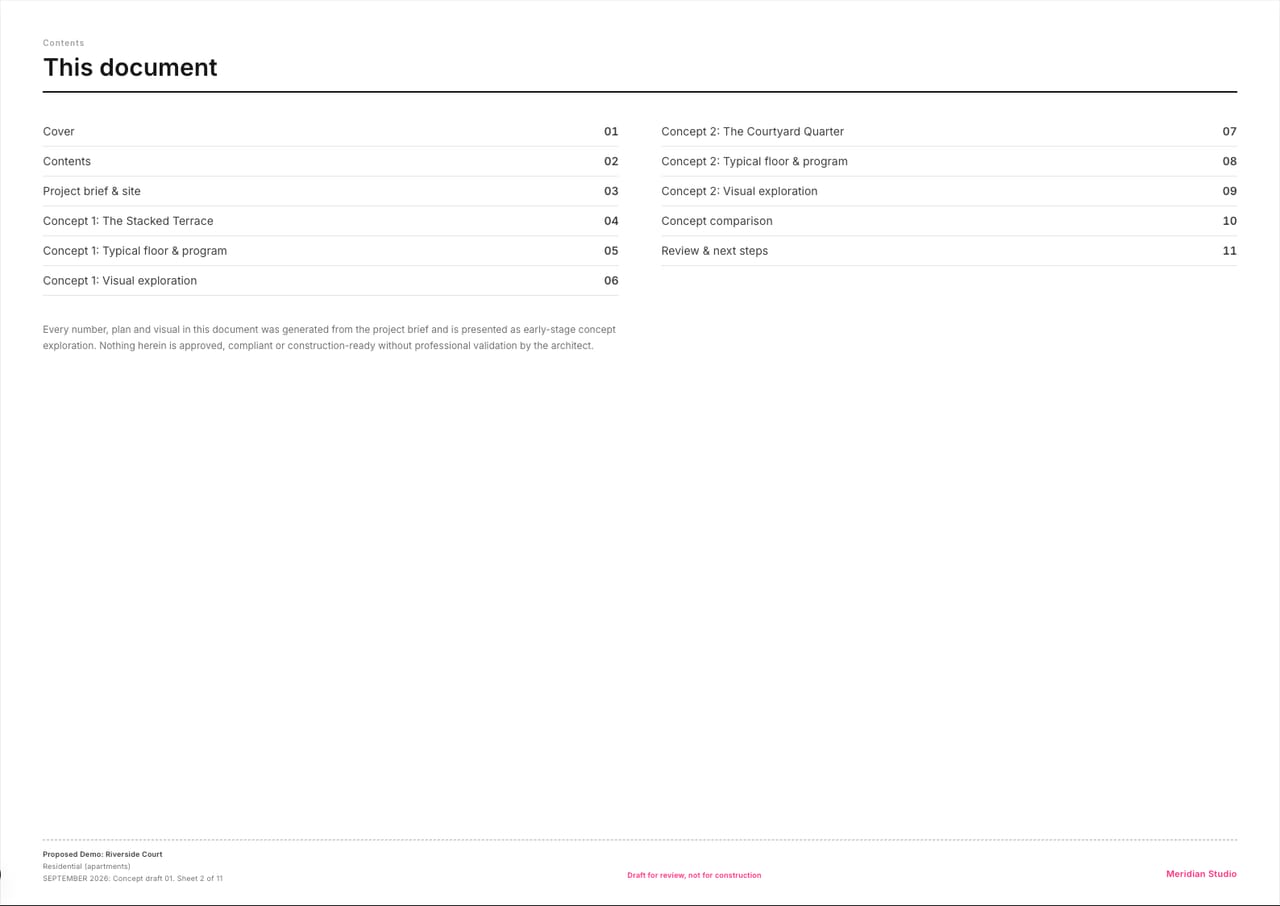
Cover, contents, brief, one section per direction with its plan and visual exploration, a comparison sheet and a closing page. Every sheet is marked draft for review.
Made for your practice
The concept brain answers as your firm: your name, your city, your track record, your past projects as precedent, your drawing notes on every sheet, your letterhead on the deck. Try it on the demo practice, then we set it up as yours.
AI prepares. The firm reviews. The architect decides.